
Lightning is one of nature’s most unpredictable and destructive forces. If you are a facility manager or building owner, you likely already have a lightning protection system (LPS) in place. But here is the hard truth: an unmaintained system is almost as dangerous as having no system at all.
Many people assume that once those rods are on the roof, the job is done. Unfortunately, weather, corrosion, and roof repairs can compromise your safety net. This is where a lightning protection system maintenance contract becomes your most valuable asset.
In this blog, we’ll dive deep into why a lightning protection system maintenance contract is essential, what it should include, and how it protects your bottom line.


What is a Lightning Protection System Maintenance Contract?
A lightning protection system maintenance contract is a formal agreement between a property owner and a certified lightning protection specialist. It ensures that an LPS is regularly inspected, tested, and repaired to meet safety standards like NFPA 780 or UL 96A. These contracts typically include annual visual inspections, grounding resistance testing, and surge protection audits to prevent system failure during a strike.
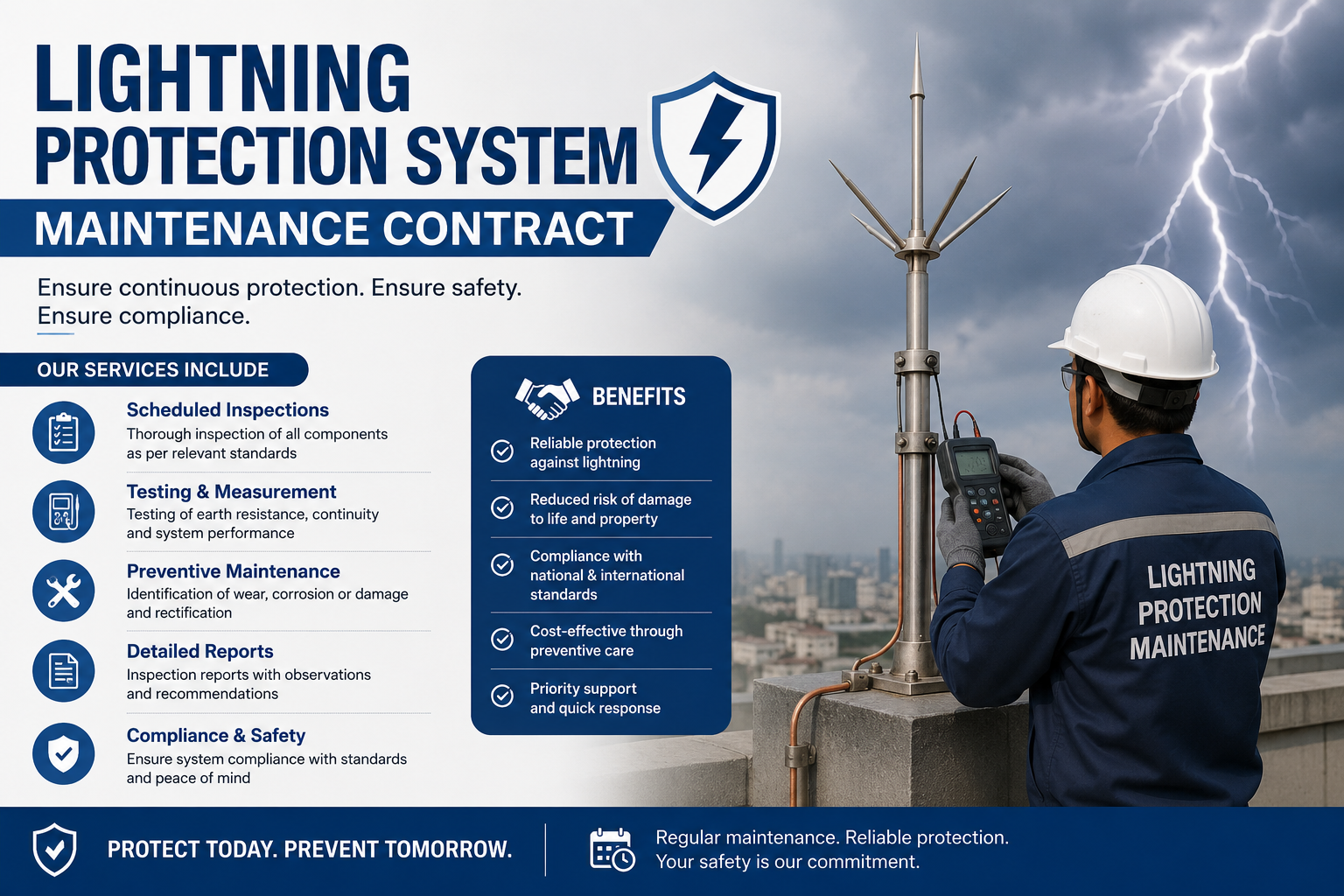
Why Your Facility Needs a Lightning Protection System Maintenance Contract
When a lightning bolt hits your building, it carries millions of volts of electricity. Your LPS is designed to give that energy a safe path to the ground. However, over time, components can degrade.
1. The “Silent” Degradation Problem
Think about where your LPS lives: on the roof. It is exposed to extreme heat, freezing temperatures, wind, and rain 24/7. Copper and aluminum components can oxidize. Clamps can loosen due to building vibration. Without a lightning protection system maintenance contract, these small issues remain hidden until a storm hits and the system fails to divert the surge.
2. Accidental Damage from Roof Work
Did you have an HVAC technician on the roof last month? Or maybe a roofing crew? It is incredibly common for down-conductors to be tripped over, disconnected, or even cut during routine building maintenance. A lightning protection system maintenance contract ensures that an expert regularly checks for these human-led “accidents” that could leave your building vulnerable.
3. Insurance and Liability
If a fire breaks out due to a lightning strike and your system was found to be neglected, your insurance provider might push back on the claim. Having a lightning protection system maintenance contract provides a documented paper trail of due diligence. It proves you took every necessary step to protect the life and property within your walls.
What Should Be Included in a Lightning Protection System Maintenance Contract?
Not all maintenance agreements are created equal. When you are reviewing a potential lightning protection system maintenance contract, you should look for several specific service tiers.
Scheduled Visual Inspections
At a minimum, your lightning protection system maintenance contract should provide an annual visual inspection. The technician will walk the roof and the perimeter to ensure:
- Air terminals (lightning rods) are upright and secure.
- Conductors are properly bonded and haven’t been severed.
- There are no signs of corrosion or “galvanic action” (where two different metals touch and eat each other away).
Comprehensive Electrical Testing
Every 3 to 5 years, your lightning protection system maintenance contract should include “continuity and resistance testing.” This isn’t just looking at the wires; it’s using specialized meters to ensure the electricity can actually reach the ground. If the soil resistance has changed or a ground rod has eroded, the system won’t work.
Surge Protective Device (SPD) Maintenance
Lightning protection isn’t just about the roof; it’s about your electrical panels. A high-quality lightning protection system maintenance contract will include an audit of your SPDs. These devices “sacrifce” themselves to save your computers and machinery during a surge. If they’ve already taken a hit, they need to be replaced—something a maintenance contract will catch.
Industry Standards: The Backbone of Your Lightning Protection System Maintenance Contract
A contract is only as good as the standards it follows. You don’t want a “handyman” looking at your LPS. You want someone who adheres to:
- NFPA 780: The primary standard for the installation of lightning protection systems. Any lightning protection system maintenance contract must reference these guidelines.
- UL 96A: This focuses on the installation requirements for lightning protection.
- LPI-175: Published by the Lightning Protection Institute, this is the gold standard for system design and maintenance.
When you sign a lightning protection system maintenance contract, make sure the company employs LPI-certified Master Installers. This ensures the person testing your ground resistance actually knows what the numbers mean.
The Checklist: What to Look for During an Inspection
If you’re wondering what actually happens during the performance of a lightning protection system maintenance contract, here is the “Expert Checklist” our teams use:
- Check for Loose Connections: Wind can rattle cables loose over a decade.
- Inspect Roof Penetrations: Ensure the LPS isn’t causing roof leaks.
- Bonding Check: Ensure new metal additions to the roof (like new exhaust fans) have been bonded into the existing system.
- Ground Well Inspection: Opening the ground covers to check for wire integrity.
- Documentation: Providing a signed report that you can file for your fire marshal or insurance agent.
Without a recurring lightning protection system maintenance contract, these 5 critical steps usually get ignored until it’s too late.
Choosing the Right Partner for Your Lightning Protection System Maintenance Contract
Selecting a vendor for your lightning protection system maintenance contract shouldn’t be based on the lowest price alone. You are buying peace of mind.
- Ask for Certifications: Are they members of the Lightning Protection Institute (LPI)?
- Verify Insurance: Ensure they have high-limit liability insurance, as they will be working on your roof.
- Review Sample Reports: Ask to see what a report looks like after an inspection performed under their lightning protection system maintenance contract. It should be detailed, with photos and clear “pass/fail” marks.
Frequently Asked Questions
How often should I renew my lightning protection system maintenance contract?
Most facilities opt for an annual or bi-annual renewal. Because weather patterns and building modifications happen constantly, an annual check-up is the safest bet for most commercial properties.
Does a lightning protection system maintenance contract cover the cost of repairs?
Generally, no. The lightning protection system maintenance contract covers the inspection, testing, and reporting. If a problem is found (like a broken conductor), the contractor will provide a quote for the repair. However, contract holders often get “preferred pricing” on these repairs.
Can our internal maintenance team handle the inspections?
While your team can look for obvious damage, they likely lack the specialized grounding meters and the deep knowledge of NFPA 780 codes. To stay compliant and safe, a professional lightning protection system maintenance contract is highly recommended.
Conclusion: Don’t Wait for the Thunder
A lightning strike happens in a fraction of a second, but the damage can last a lifetime—from destroyed servers and lost data to catastrophic structure fires. Investing in a lightning protection system maintenance contract is a proactive step that moves lightning safety from a “guess” to a “certainty.”
By maintaining your system through a dedicated lightning protection system maintenance contract, you ensure that your building, your employees, and your equipment remain safe through every storm.
Ready to Protect Your Facility?
Don’t leave your safety to chance. Our team of LPI-certified experts specializes in comprehensive system audits. Contact us today to receive a customized quote for a lightning protection system maintenance contract tailored to your building’s specific needs.
TAKO’s Credentials


Disclaimer
The information provided in this blog is intended for general informational purposes only. Prices, specifications, and availability may vary depending on suppliers, location, and market conditions. Readers should verify details directly with suppliers or manufacturers before making purchasing decisions. The author and website are not responsible for any errors, omissions, or outcomes resulting from the use of this information. Always consult a professional for advice tailored to your specific needs.